Head of Design2022–2025WebModeration tool, design system, self-serve for creators

Optic

The tool OpenSea's moderators used to review NFT copies, which OpenSea later acquired. I was its only designer and designed every screen.
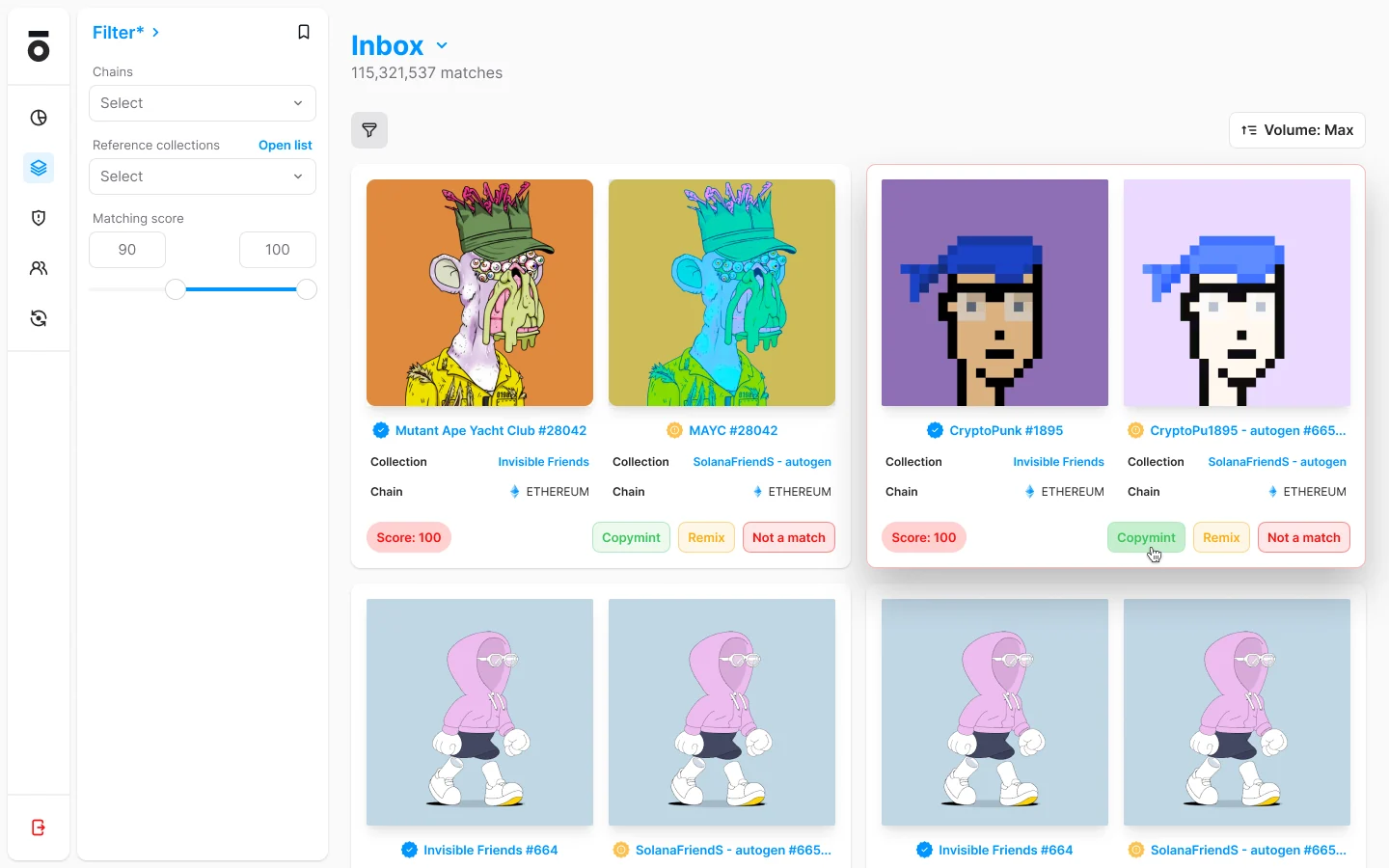
The Optic moderation tool: an inbox of 115,321,537 matches, each a pair of NFTs side by side with its collection, chain and a match score, and three verdicts — copymint, remix, not a match.
The Inbox — 115,321,537 pairs the model found, each one a token against the token it may be copying, and the three verdicts a moderator can give it: copymint, remix, not a match.

The problem

Moderators at OpenSea reviewed copymint claims (a token minted from someone else's art) from original collection owners by hand. The model found 115 million matching pairs of tokens; nobody could review them all. I had to turn a bottomless queue into decisions a small team could stand behind.
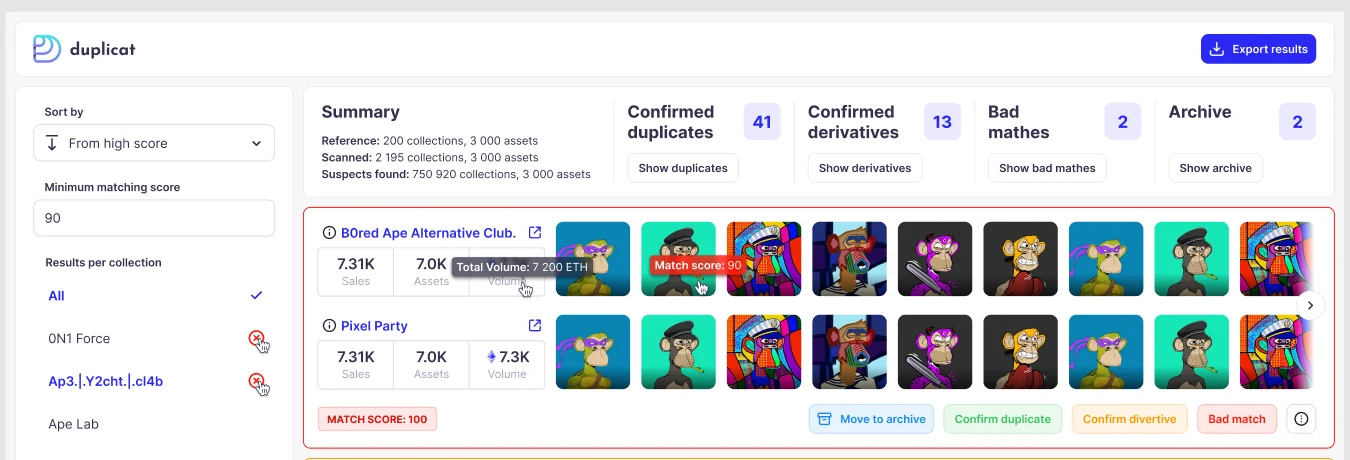
Duplicat, the first version: a summary bar counting confirmed duplicates, derivatives, bad matches and the archive, and one pair of collections shown as two rows of token art with a match score of 100 and four actions.
Duplicat — the proof of concept, put together fast to find out whether the queue could be worked at all. Two collections as two rows of art, a score, and four things to do about it. The whole flow lived on one board: sign-in, users, five states of the feed, compare, confirmed duplicates, archive.

Who did what

I was the only designer, full-time. I worked with one front-end and two back-end engineers; the rest of the team worked on the model.

Optic's engineers built it. I designed every screen and was the product owner.
Decisions, and what each one cost

  • A third verdict: Remix Copymint, Remix, Not a match — instead of copy / not a copy. Price: the moderator draws the line between a copy and a derivative every single time, and the third category needs its own policy. Bought: the marketplace never calls a legitimate remix a copy, and a false accusation against an author costs more than a missed copy.
  • Auto-flag at a score of 100 Price: a model error goes live without a human in the loop, and a false positive pulls a real author's work from sale. Bought: a queue of 115 million matches becomes finite; the humans see only what is ambiguous.
  • Sort by trading volume Price: violations in small collections are, by design, never reviewed. Bought: a team that cannot review everything deals with the costliest copies first.
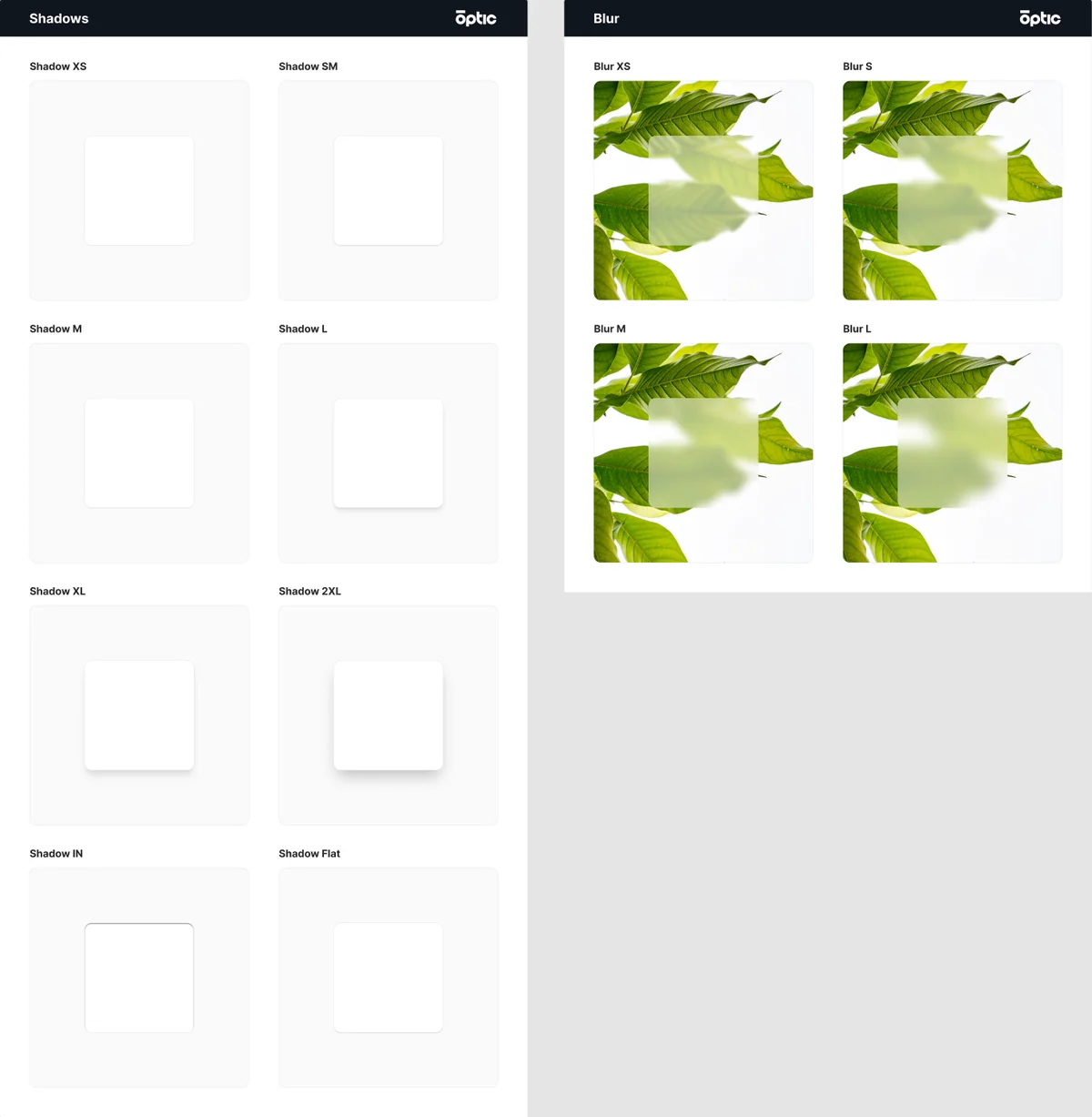
Two sheets from the Optic component library: eight shadow tokens from XS to 2XL plus inset and flat, and four blur tokens from XS to L, each rendered on a sample.
The library — every design token rendered rather than described. Eight shadows, four blurs, each on its own sample, so an engineer picks by looking instead of by reading a number.

What failed

Optic for Creators — self-serve for collection authors. The market was tiny: authors whose collections are valuable enough to copy and who have a budget are a handful. Demand came from the marketplaces that carry the liability, and that is where the product went.

What came of it

OpenSea's moderation team adopted the tool, and then OpenSea acquired it.

Next

Lyvely: a creator's web profile, a tip being paid inside a live call, and a membership page.

Lead Product Designer2024–2026

Lyvely

a creator platform where fans pay, on web, iOS and Android.