At OpticHead of Design2023–2024Web, Chrome extension, Telegram botUI/UX, sole designer

AI or Not

the AI-image detector Optic launched in 2023. I designed it from the first draft until it became a company of its own.
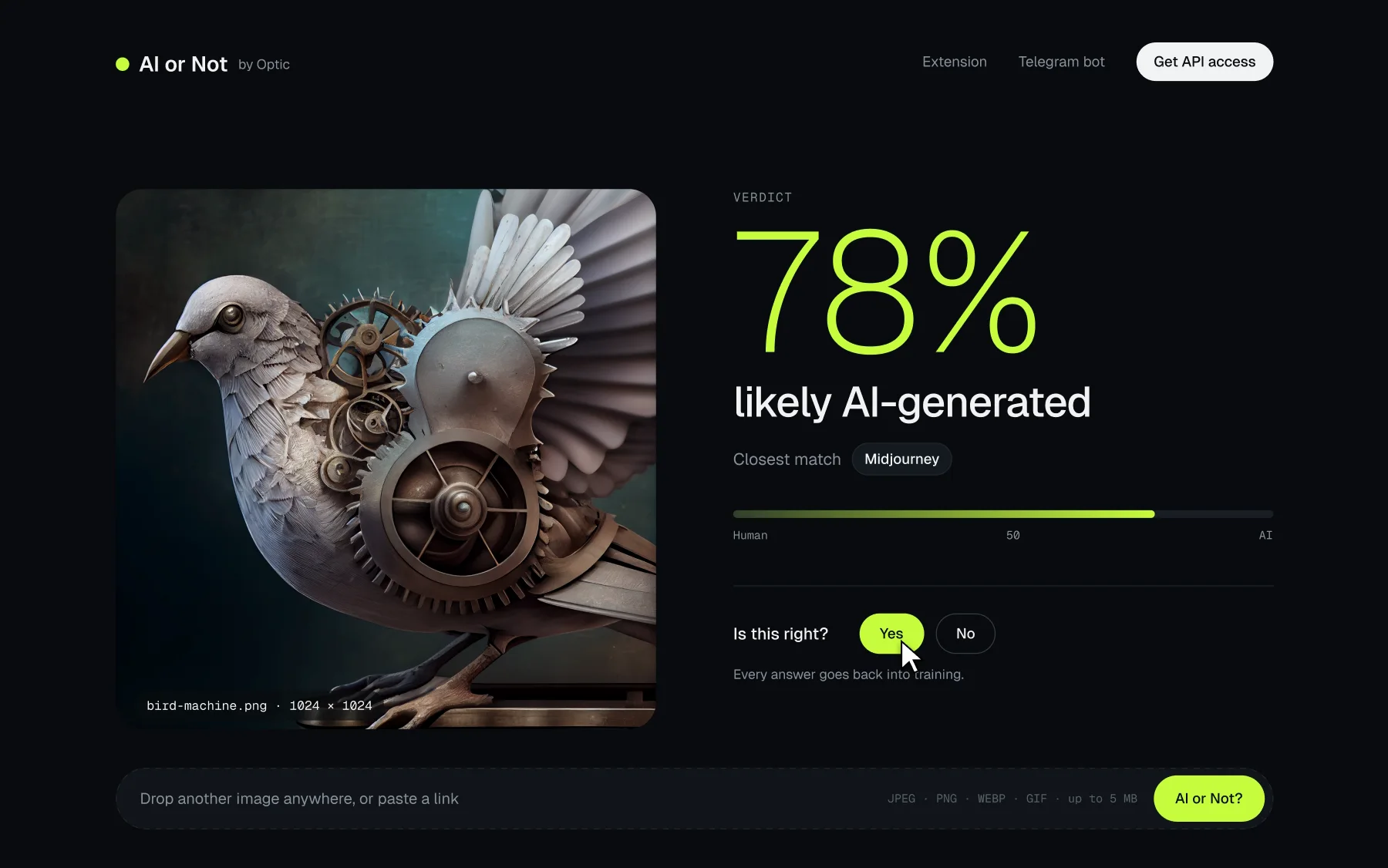
The AI or Not verdict playing: a lime line scans down the steampunk bird, the digits roll up to 78%, the bar fills from Human toward AI, "likely AI-generated" and the Midjourney match appear, and a cursor answers "Is this right?" with Yes — "every answer goes back into training".
The verdict, redrawn in 2026 from the 2023 screen: how sure the model is, which generator the image is closest to, and a question back to the person.

A verdict from a model that was still learning

AI or Not started inside Optic in 2023: drop an image, find out whether a person made it or a generator did. We were six: three engineers, two on the model, and me, the only designer. I worked on it from the first draft through the release, the first users and support, until the spin-off.

It was an MVP, and the model was still being trained. A flat "AI" or "not AI" would have claimed more than it knew, so I wanted the screen to be honest about how sure it was.
Show how sure, then ask if it's right

  • A percentage instead of yes or no The verdict is a number and a sentence, 78% likely AI-generated, plus the generator the image is closest to. I put the model's doubt on the screen where people could see it. Price: a number asks the reader to think, and some read 78 % as a ruling anyway.
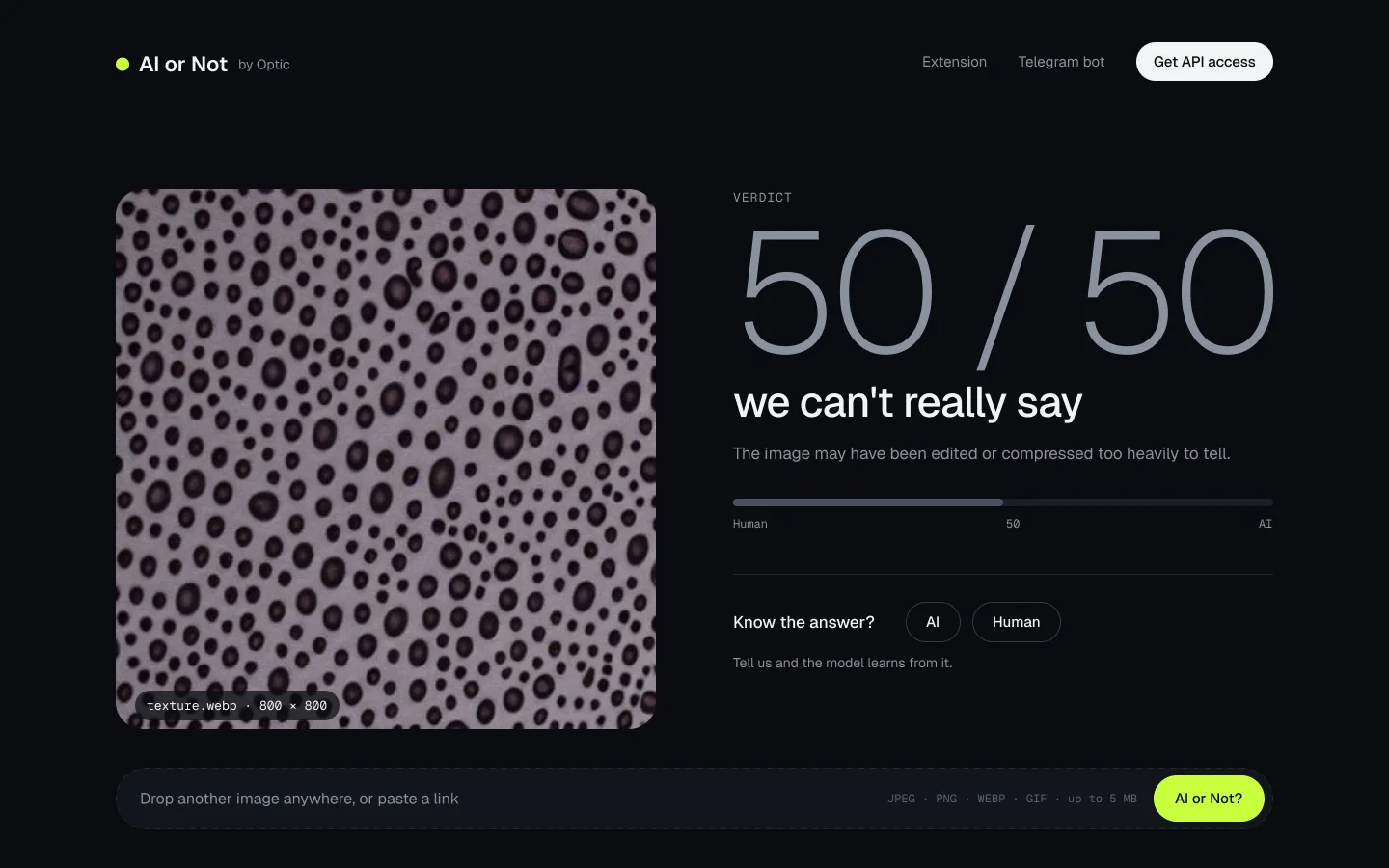
  • A third answer When the model can't tell, the page says so. An edited or heavily compressed image gets "we can't really say" instead of a coin toss. Price: an answer that isn't one, on a site called AI or Not.
  • Every check asks "is this right?" I put a Yes / No vote under every verdict, and the votes went back into retraining the model, so every check could also teach it something. Price: one more step after every check.
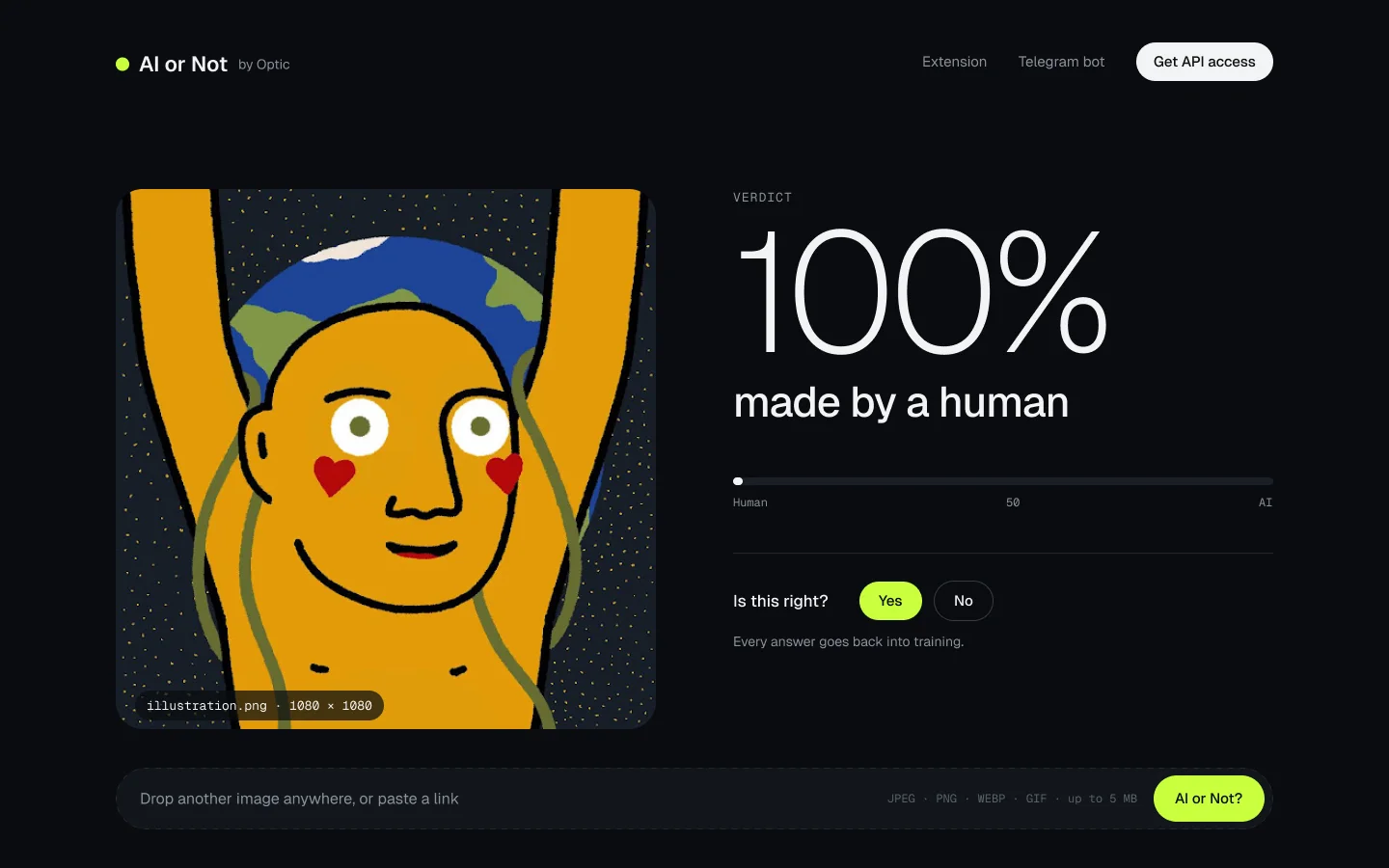
The Human verdict: an illustration of a yellow figure with raised arms beside 100%, made by a human, an empty Human-to-AI bar and the Yes / No vote.The can't-say verdict: a leopard-print texture beside 50 / 50, we can't really say, the image may have been edited or compressed too heavily to tell, and Know the answer? AI / Human.
The other two outcomes: made by a human, and can't say. On the second, the page asks the person instead: know the answer?

One action, and the check comes to you

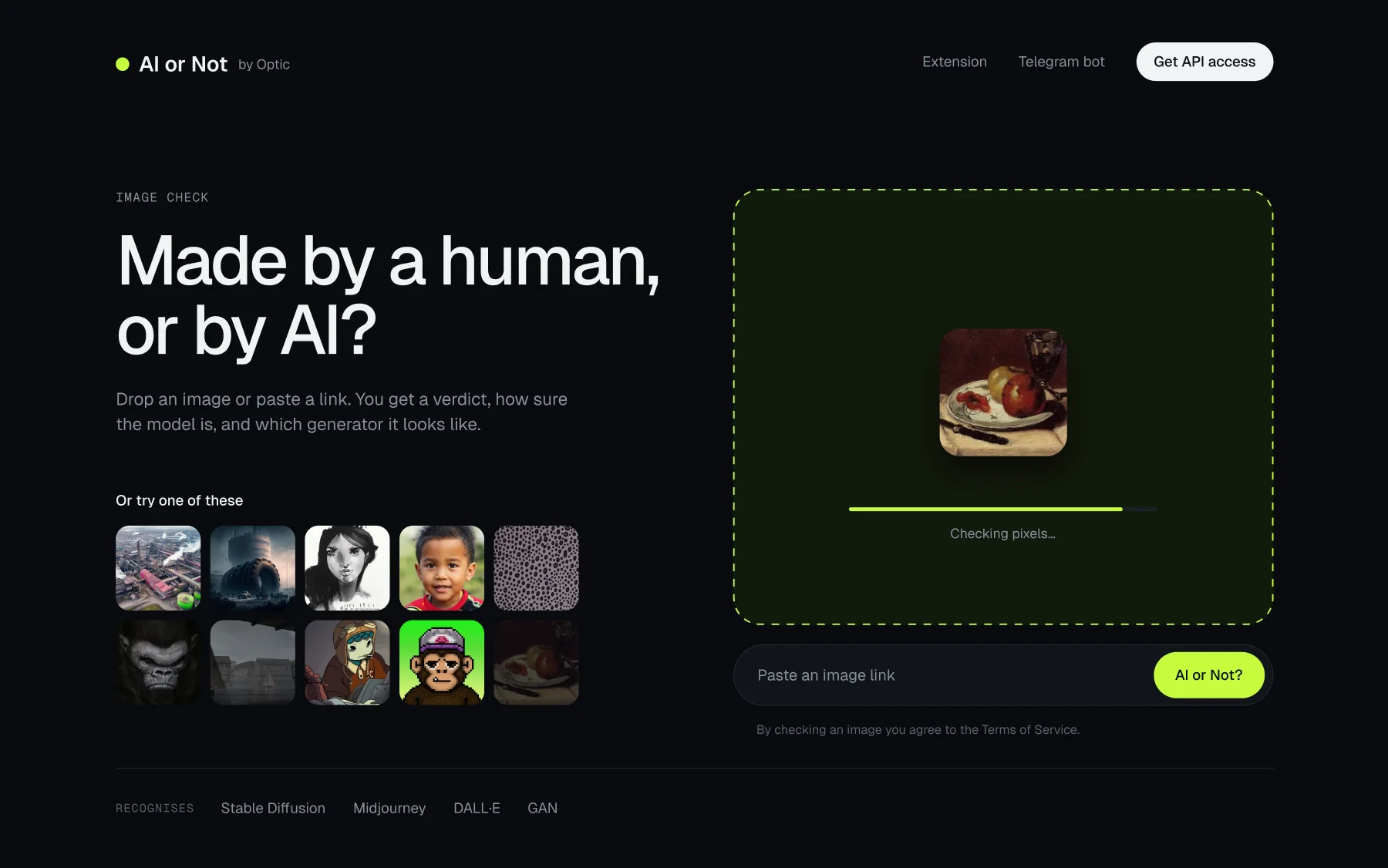
  • The home page does one thing Drop an image or paste a link. Ten sample images sit next to the drop zone, so a first visit can end in a verdict without bringing anything.
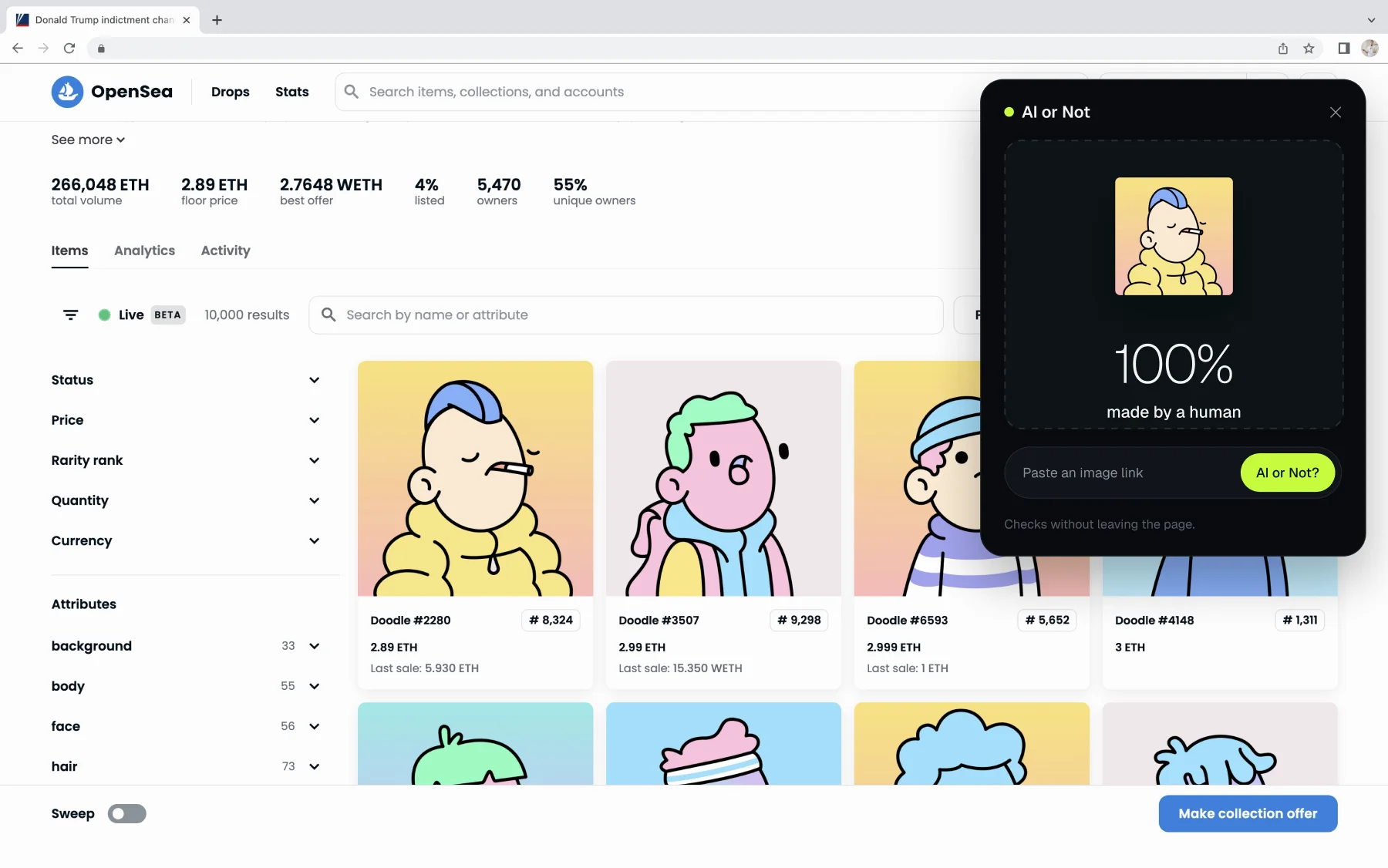
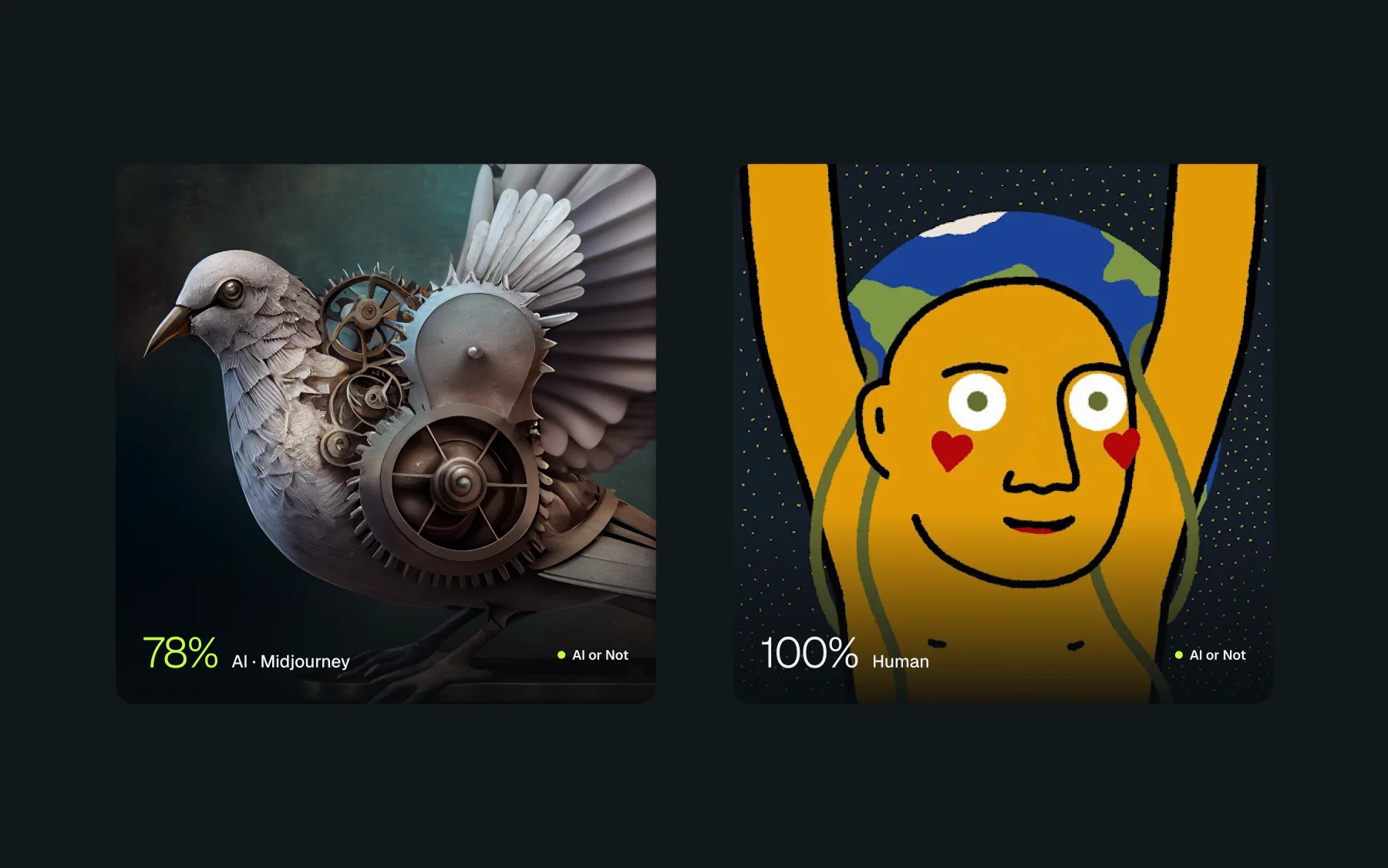
  • A check without the site The Chrome extension opens a panel on whatever page you are on; drag an image into it. The Telegram bot answers with the image itself and the verdict written onto it. Price: three surfaces to keep in step for a team of six.
The AI or Not home page playing: the headline and ten sample images come in, a cursor drags the still life from the samples into the drop zone, the zone lights up lime, and a progress bar runs under the image, checking pixels.
The home page — one drop zone, one link field, and ten images to try.
The AI or Not Chrome extension playing: the panel slides in over an OpenSea collection of Doodles, a cursor drags Doodle #2280 from the page into it, and the panel answers 100%, made by a human.
The extension over a marketplace page — a quick check without leaving it.
Two replies from the Telegram bot arriving: the steampunk bird, then the yellow figure, each with its verdict sliding up onto the image — 78% AI · Midjourney, and 100% Human.
Two replies from the Telegram bot, one AI and one human.

From a tool to an API

Within months the business turned AI or Not toward companies: platforms that take in images from users, news desks, photo stocks. The decision was theirs, and I designed it into the product. I put API access at the top of every page, added a waitlist for text, audio and video, and designed an account with the history of every check.
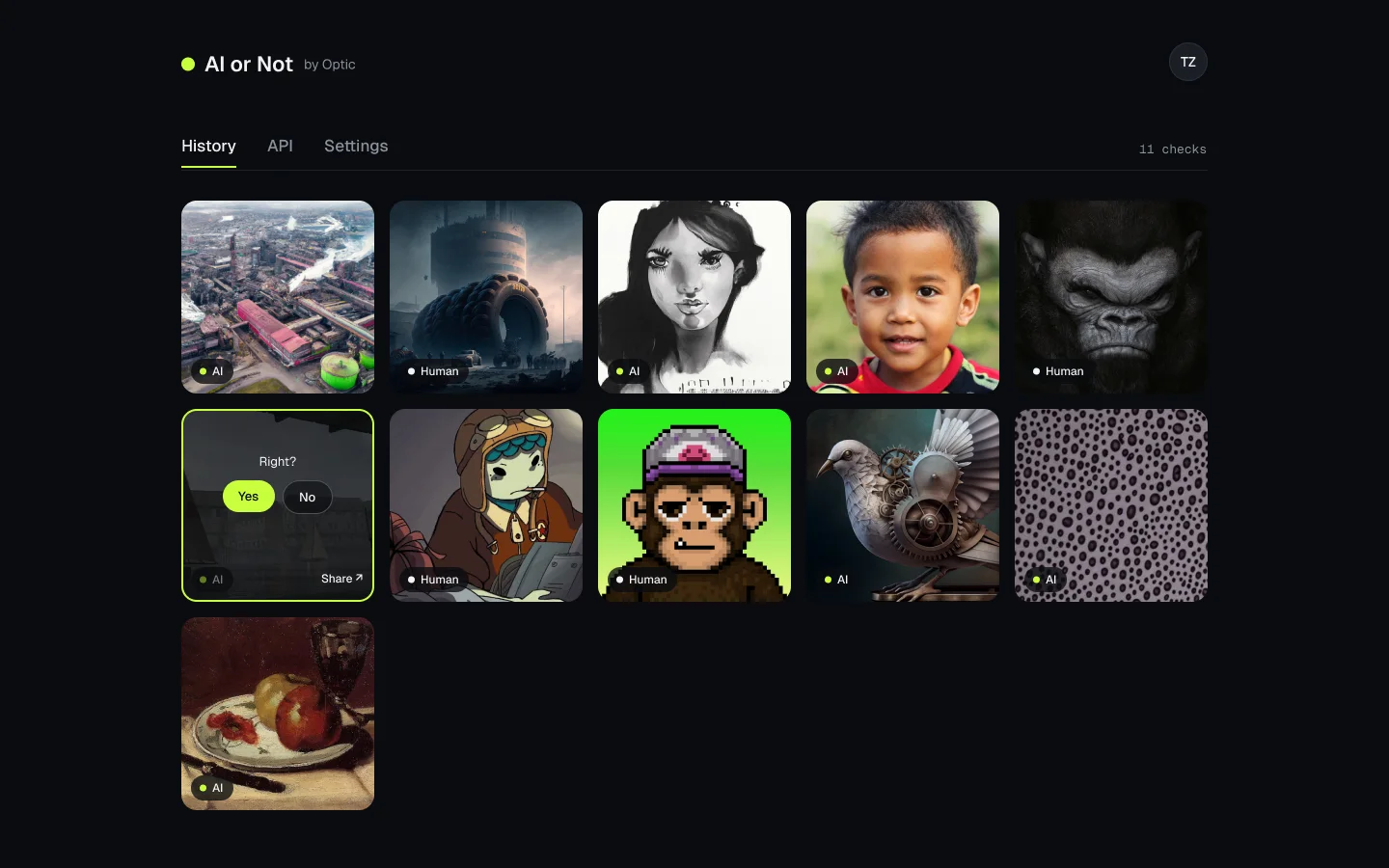
The AI or Not account: History, API and Settings tabs, a grid of eleven checked images tagged AI or Human, one of them hovered with a Yes / No vote and Share.
The account — every check you have made, and the vote still open on each.

What came of it

In its first months AI or Not was written up by the New York Times, the Wall Street Journal, BuzzFeed News, PetaPixel and designboom. Then it was spun out into a company of its own. Since then it has grown into an AI-detection API for images, video, voice and text.

Next

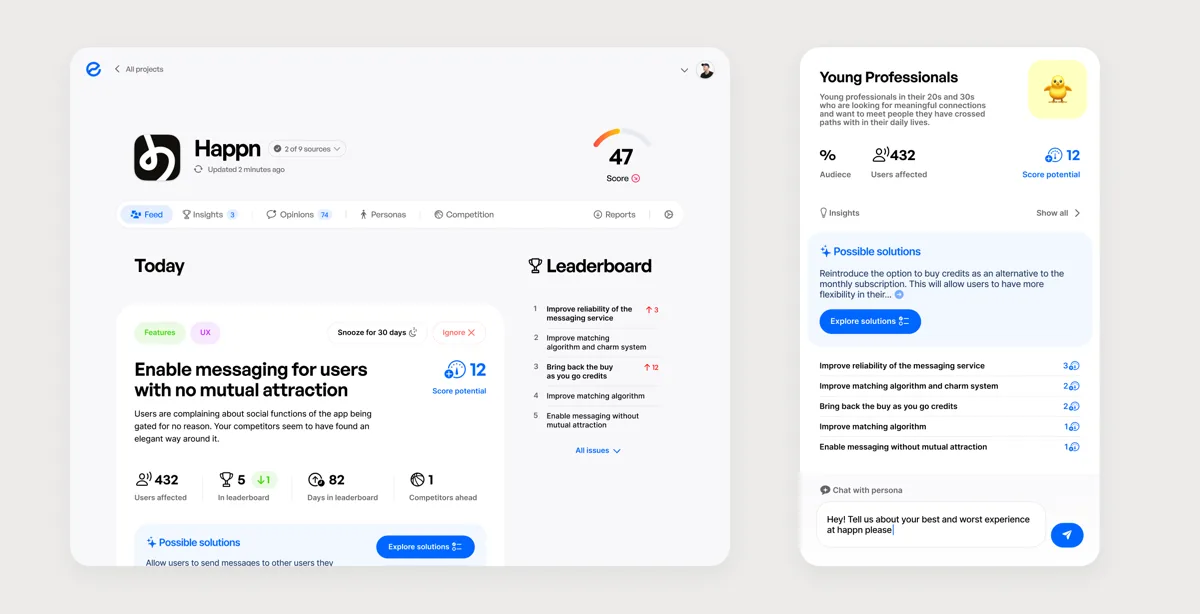
Essense: a project page with a Score of 47 and today’s top issue, and a persona you can chat with.

OpticProduct Designer2023

Essense

an AI tool that turns app reviews into a product team’s to-do list.